


This story was translated from Nepali. Read the original in Nepali
Lokesh Joshi
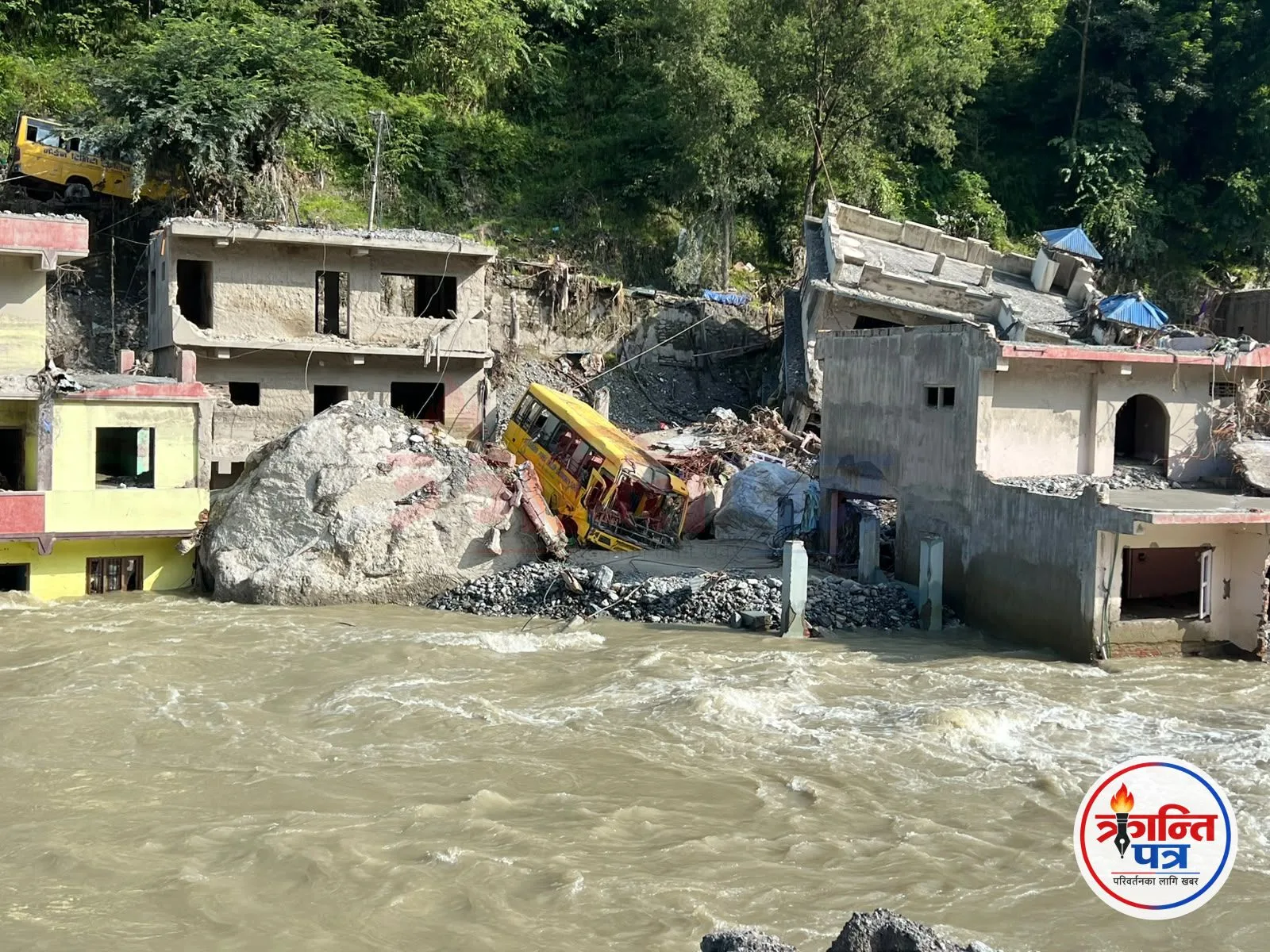
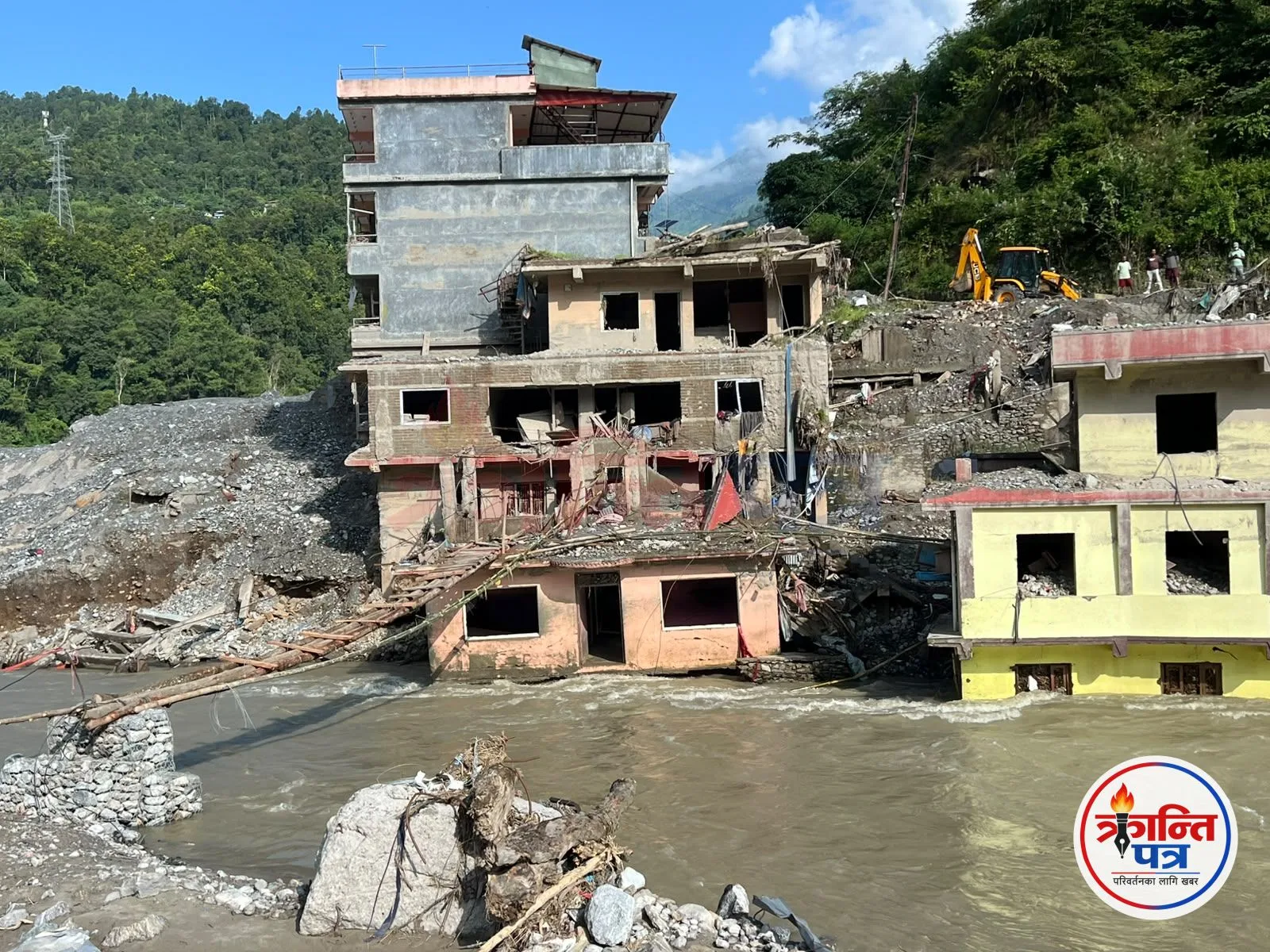
The tragedy caused by the unprecedented and catastrophic flood in the Bhotekoshi River on Bhadau 10 has become one of the saddest, most terrifying and most sensitive chapters in Nepal’s history. That flood was not just a sudden or fated natural disaster; it was the cruel result of the continuing global exploitation of nature and the environment and of exploitative structures. The terrifying fury of the Bhotekoshi brought tears to the eyes of millions of Nepalis and of justice-loving people all over the world. Seen from a human, social and environmental point of view, the tragedy deeply shook the heart and mind of every conscious citizen.
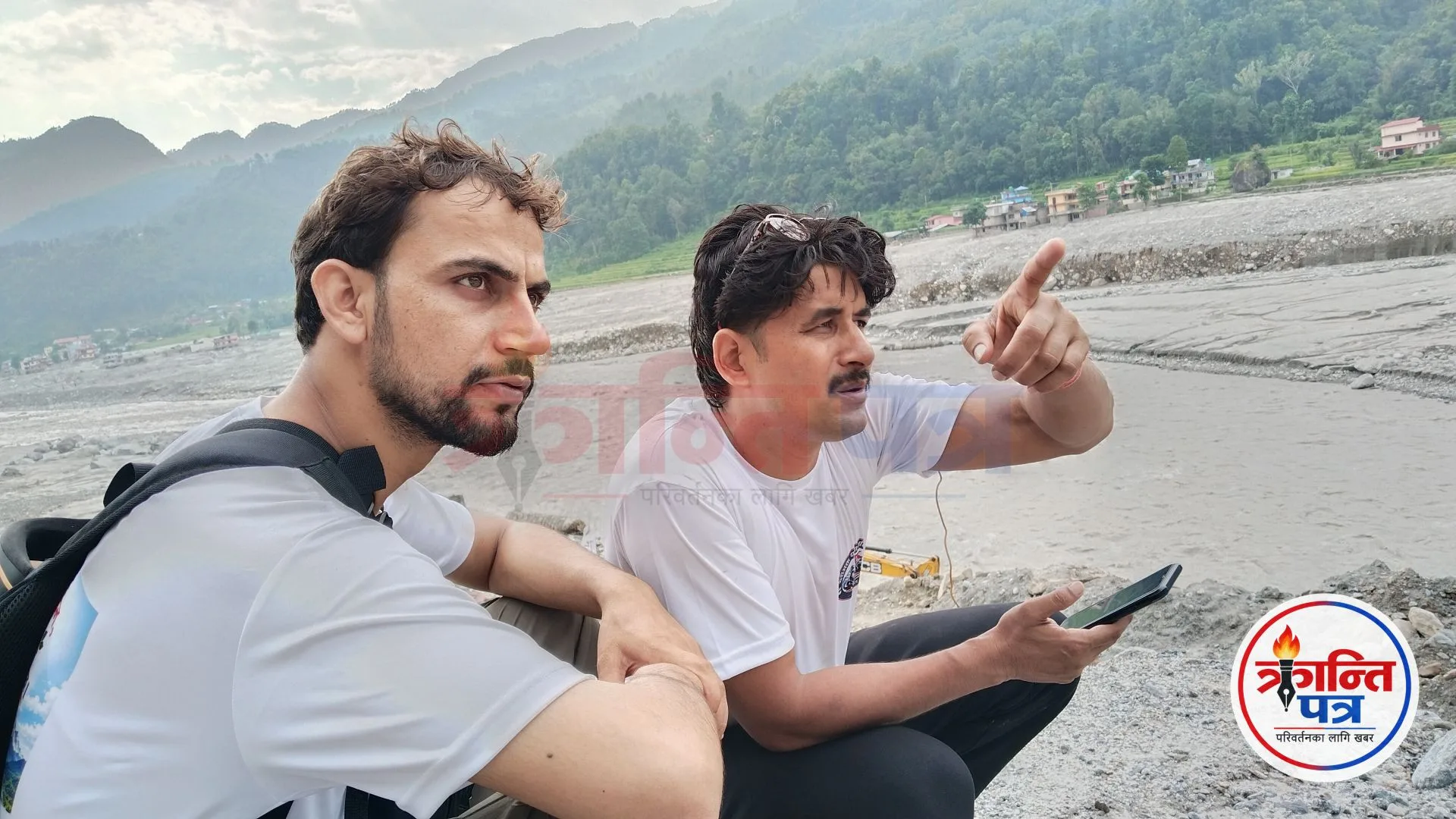
By coincidence, I was in Kailali in the Far West at the time, for my political and social work. Although I had left for Kailali on Bhadau 8, my mind stayed stuck on the catastrophe that struck the Bhotekoshi, Nuwakot and Rasuwa areas on Bhadau 10. While I was in Kailali, pictures and videos of the havoc wrought by the Bhotekoshi filled every social media wall. Wherever I looked, I saw only the terrifying face of the Bhotekoshi and the pitiful cries of displaced citizens. When I contacted close friends and relatives, I learned that most of my friends were safe, but this catastrophe had left a deep fear in their minds that will never fade. For days I could not sleep properly; one thought kept turning in my mind: what condition are our people in? How have they kept a roof over their heads?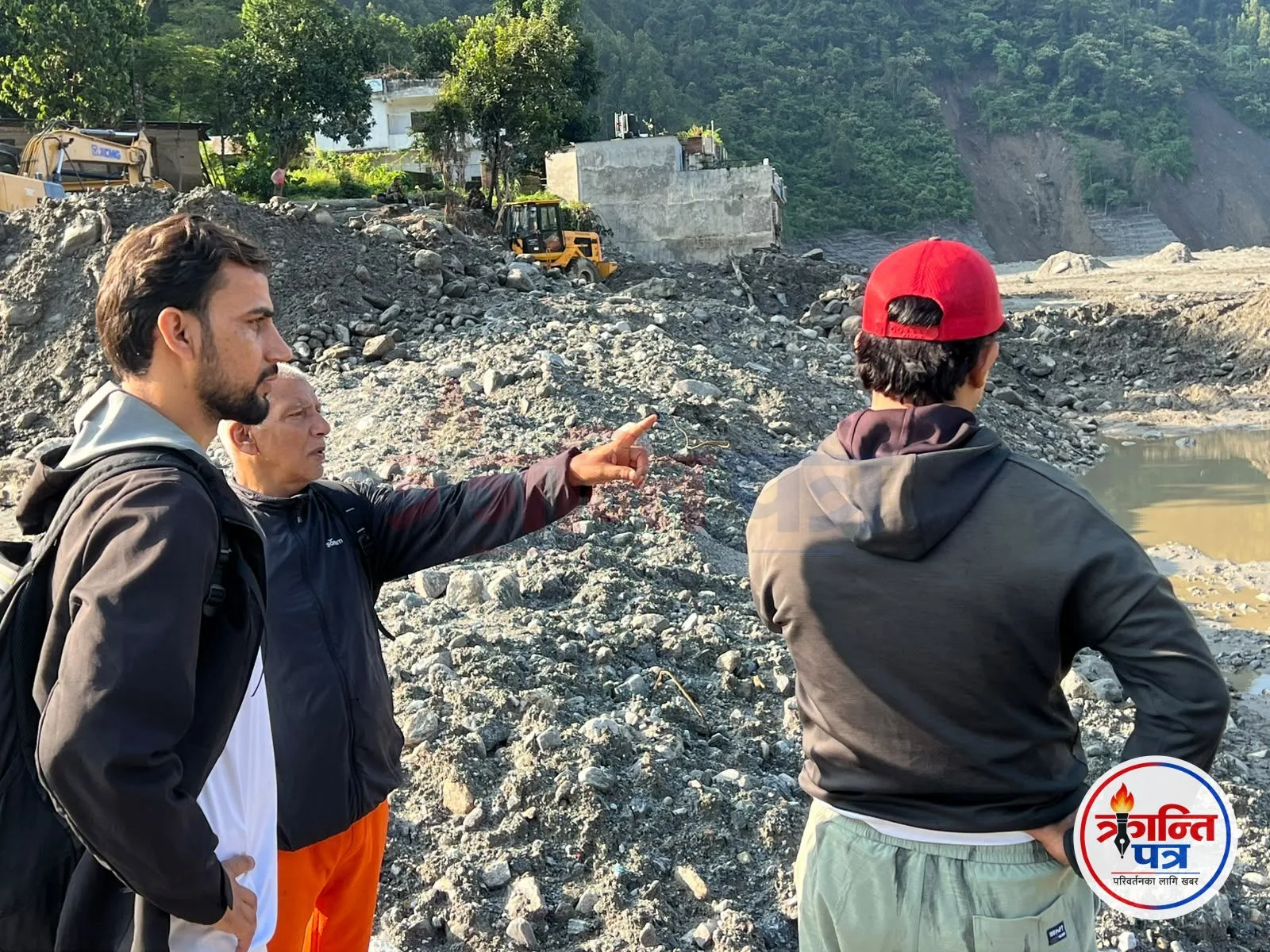
In that difficult hour of disaster, although I had a strong wish and urge to reach the affected areas at once and join the relief and rescue work, it became almost impossible to get there by land straight away because the road network was completely blocked. In such a complex situation, I strongly wished the state would rescue citizens in remote areas safely, even if it meant using helicopters. Watching social media and the news, seeing the state machinery and security agencies carrying out rescue work with great judgement, patience and energy despite their limited resources gave some consolation. Though we were geographically far away, we kept in touch through phone and social media, deposited some money in the Prime Minister’s Relief Fund on behalf of our organisation, and appealed to Nepali brothers and sisters at home and abroad for help.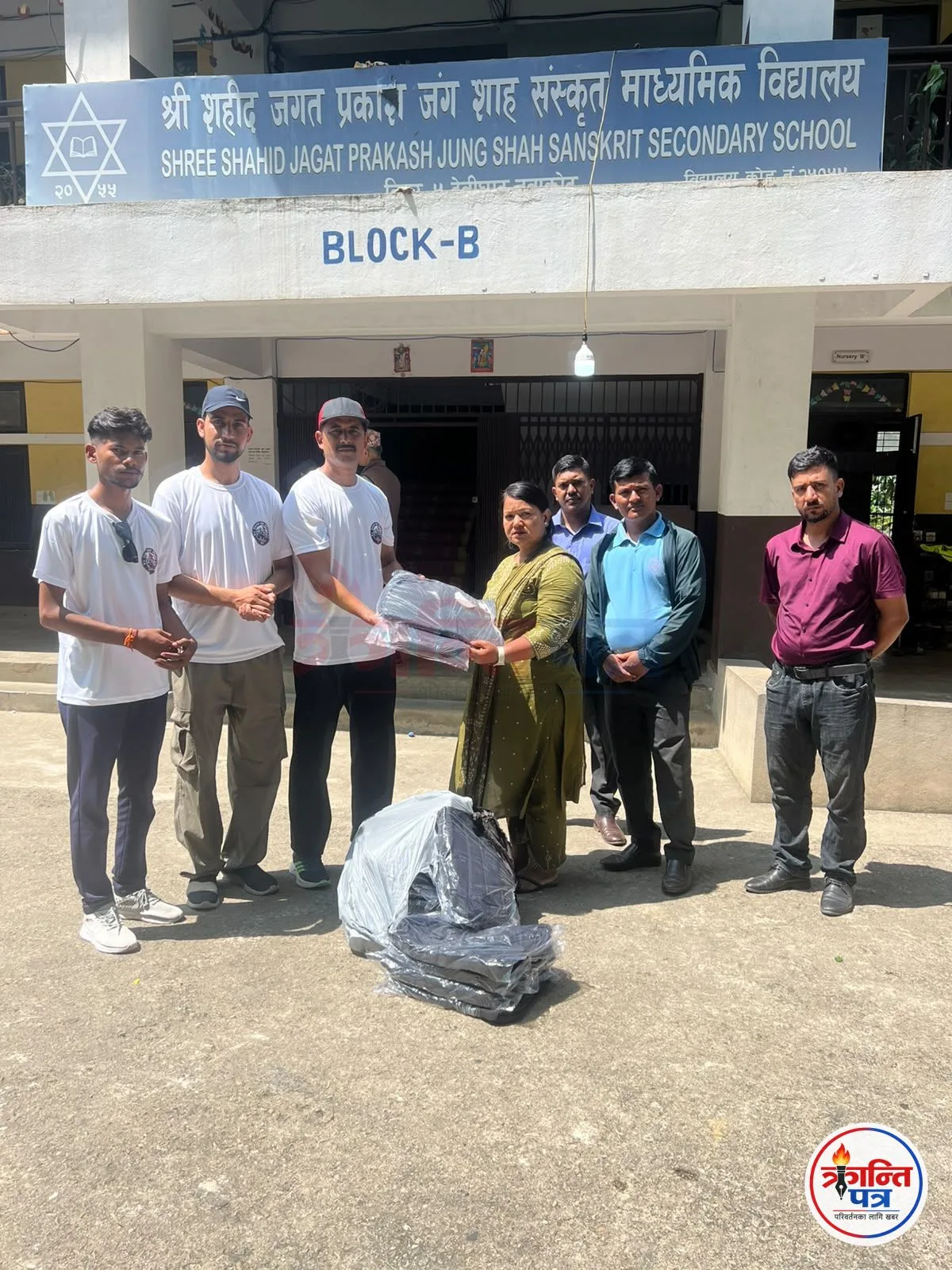
From activity in Kathmandu to the journey to Devighat
Even after reaching Kathmandu in the last week of Bhadau, my mind could not settle. We held wide discussions with friends in business and various professions in areas including Buddhanagar, Koteshwar and Baneshwar.
Everyone showed great enthusiasm, solidarity and readiness for my proposal that something immediate and concrete must be done for the flood victims. Accordingly, a campaign began to collect bags, stationery and clothes for students of schools affected by the Bhotekoshi flood. My acquaintances in Koteshwar and Baniyatar and clothing business owners in Kathmandu generously collected new and clean, wearable clothes.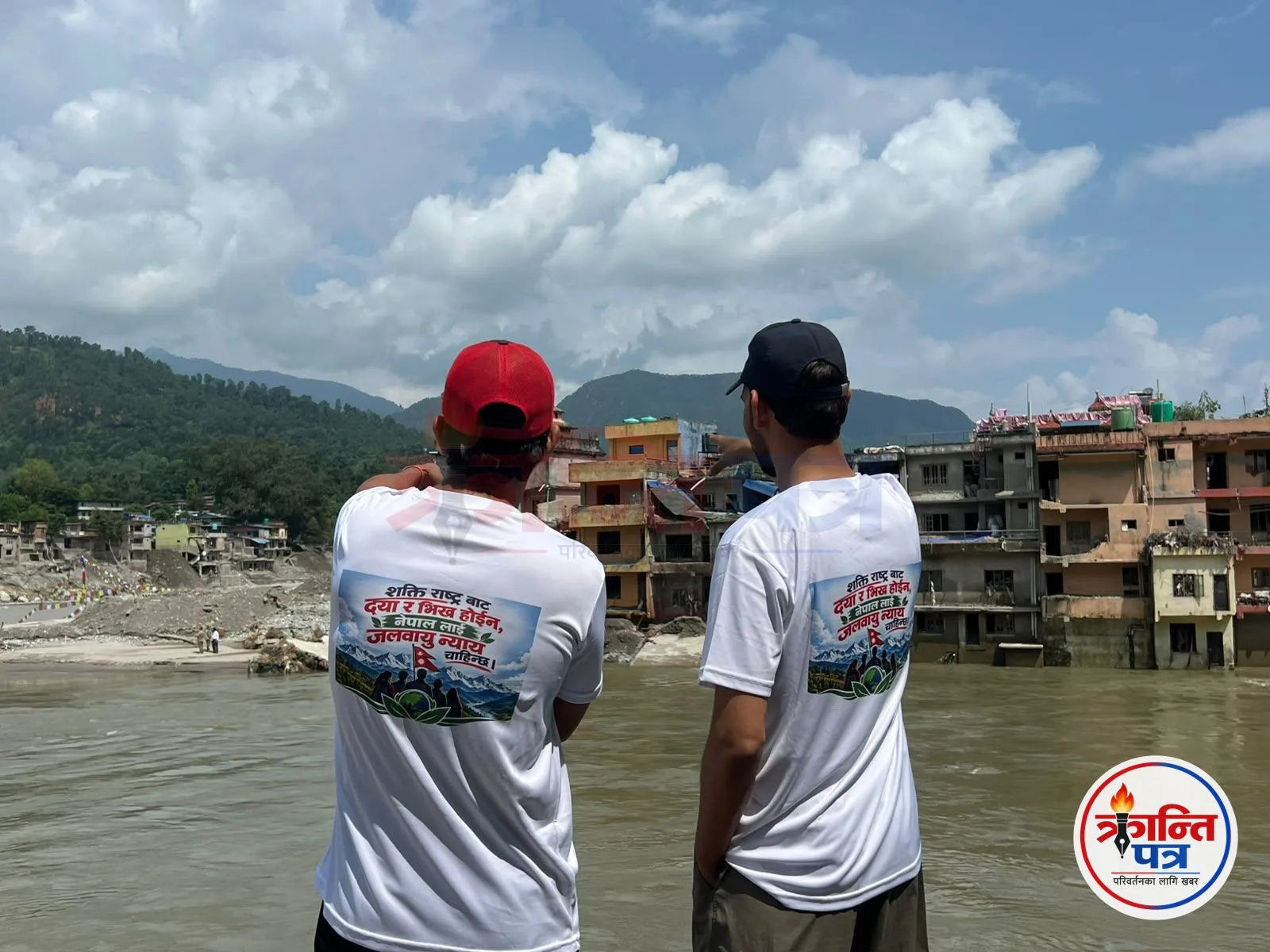
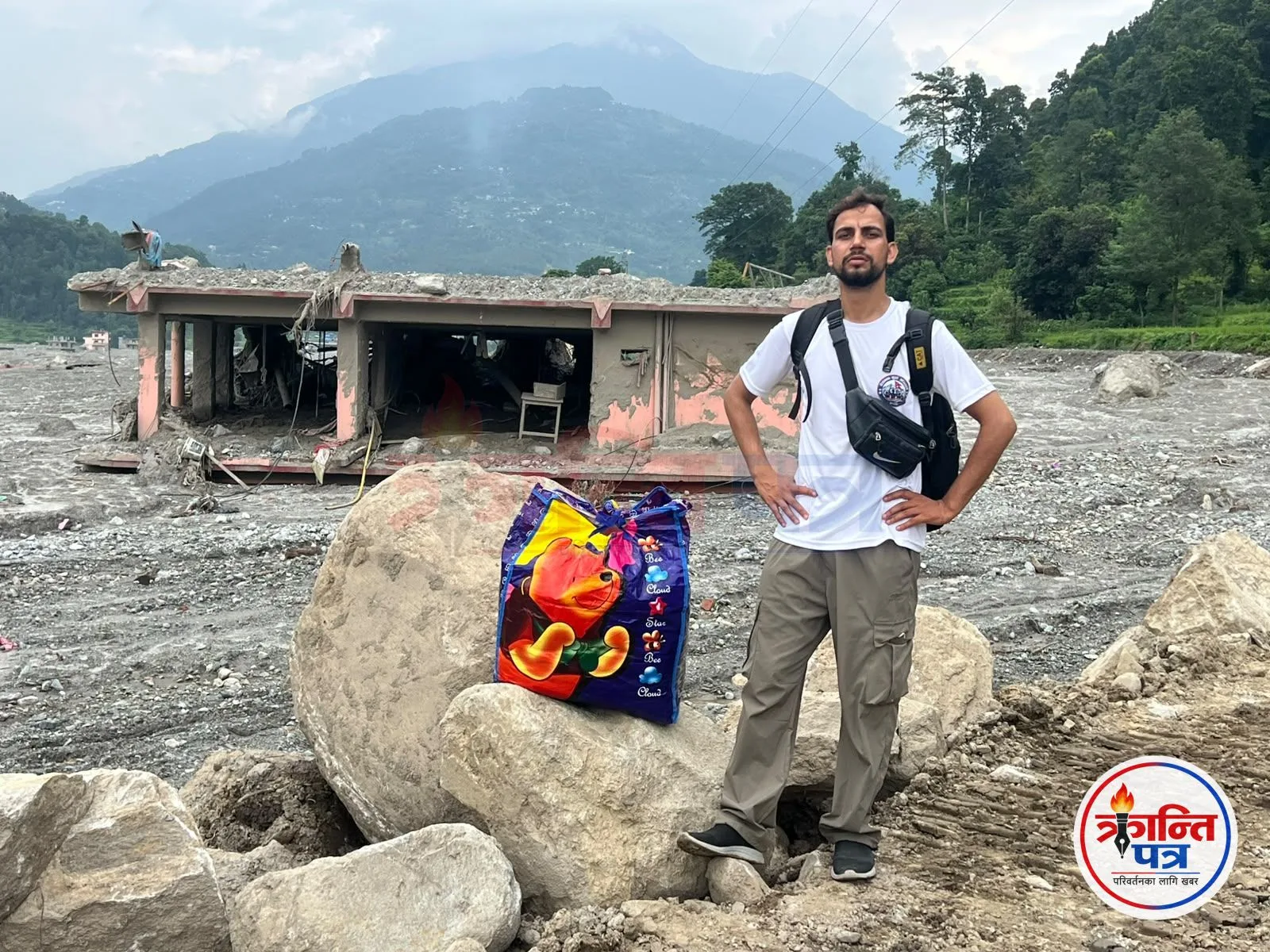
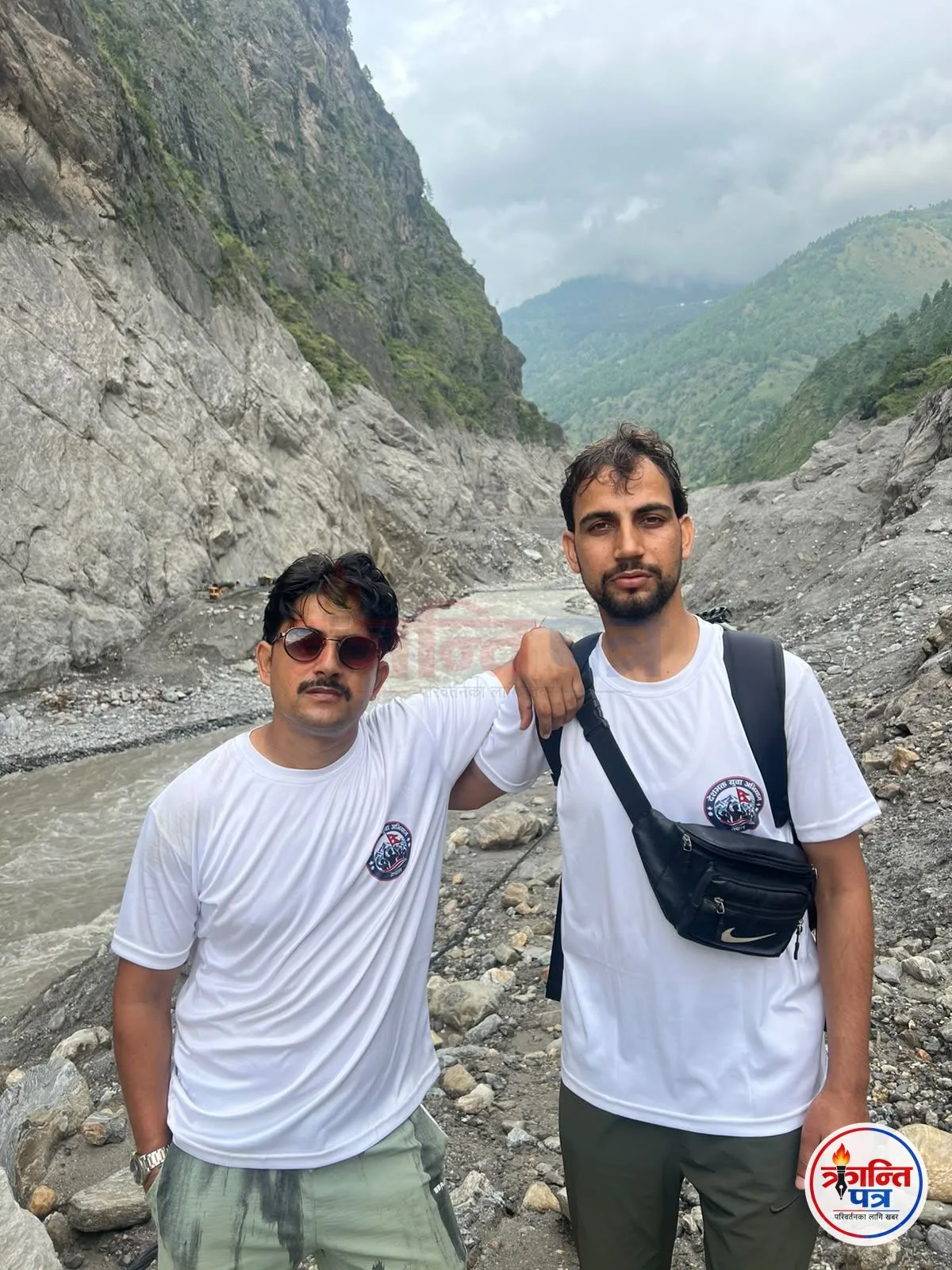
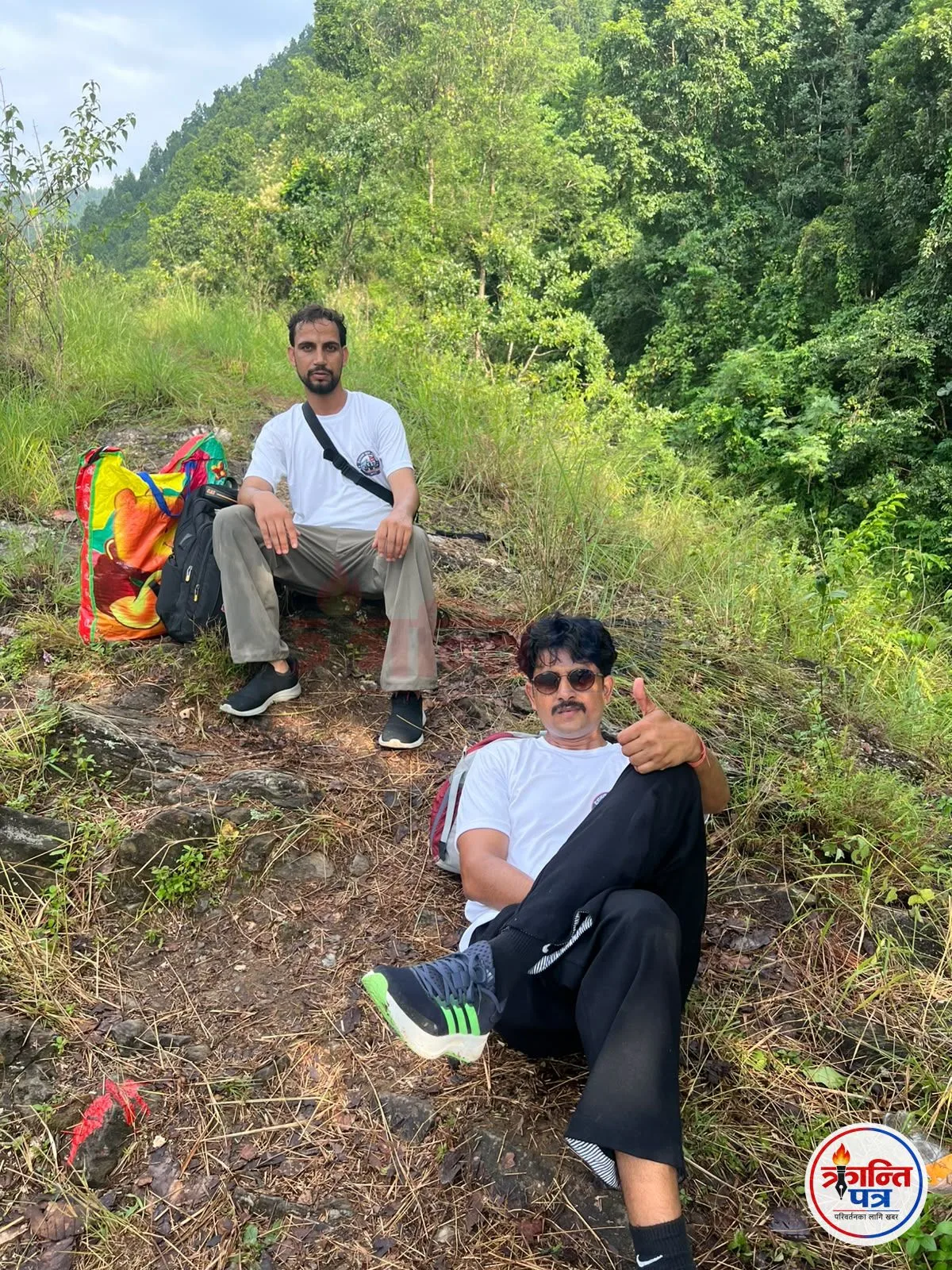
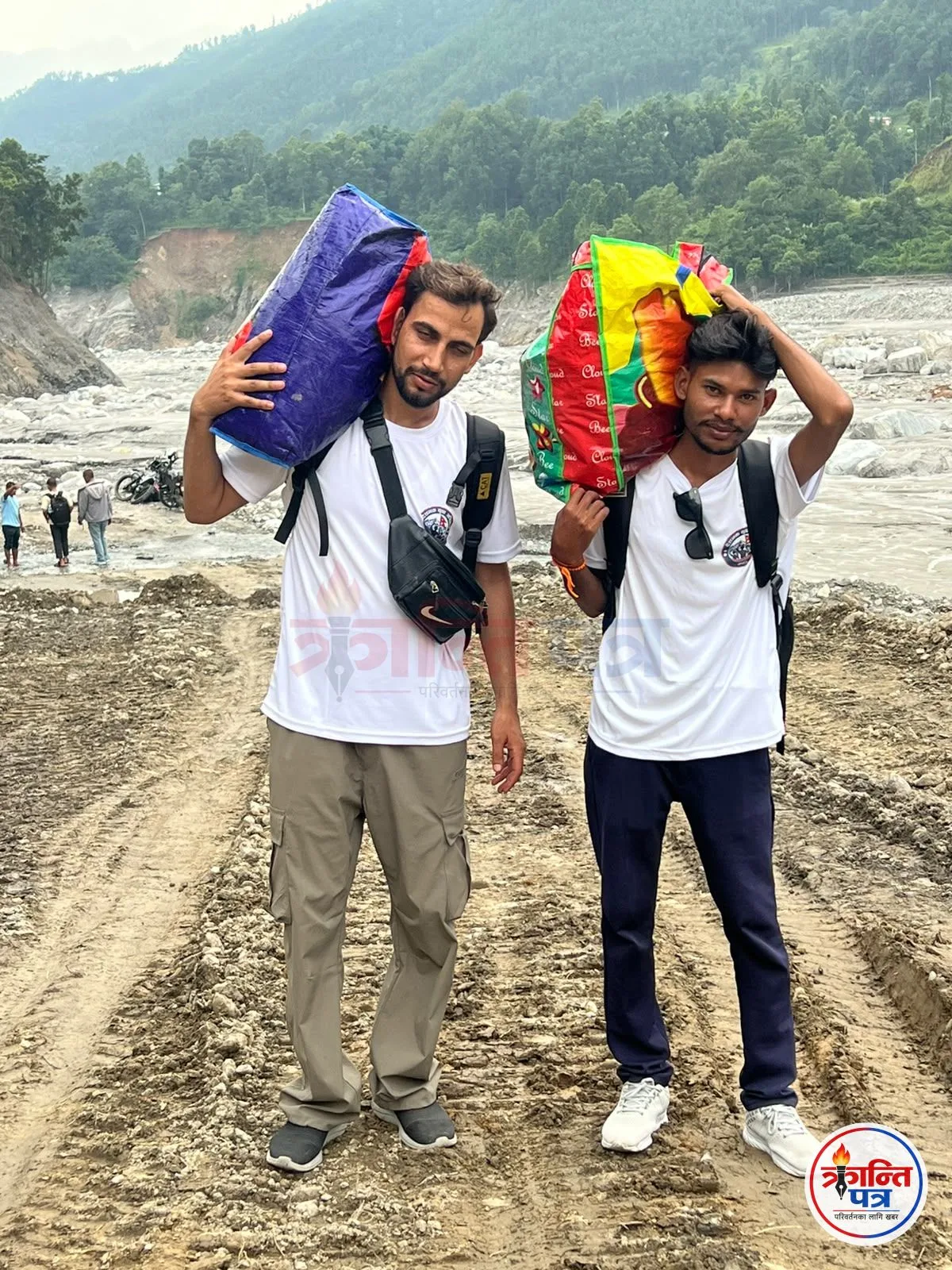
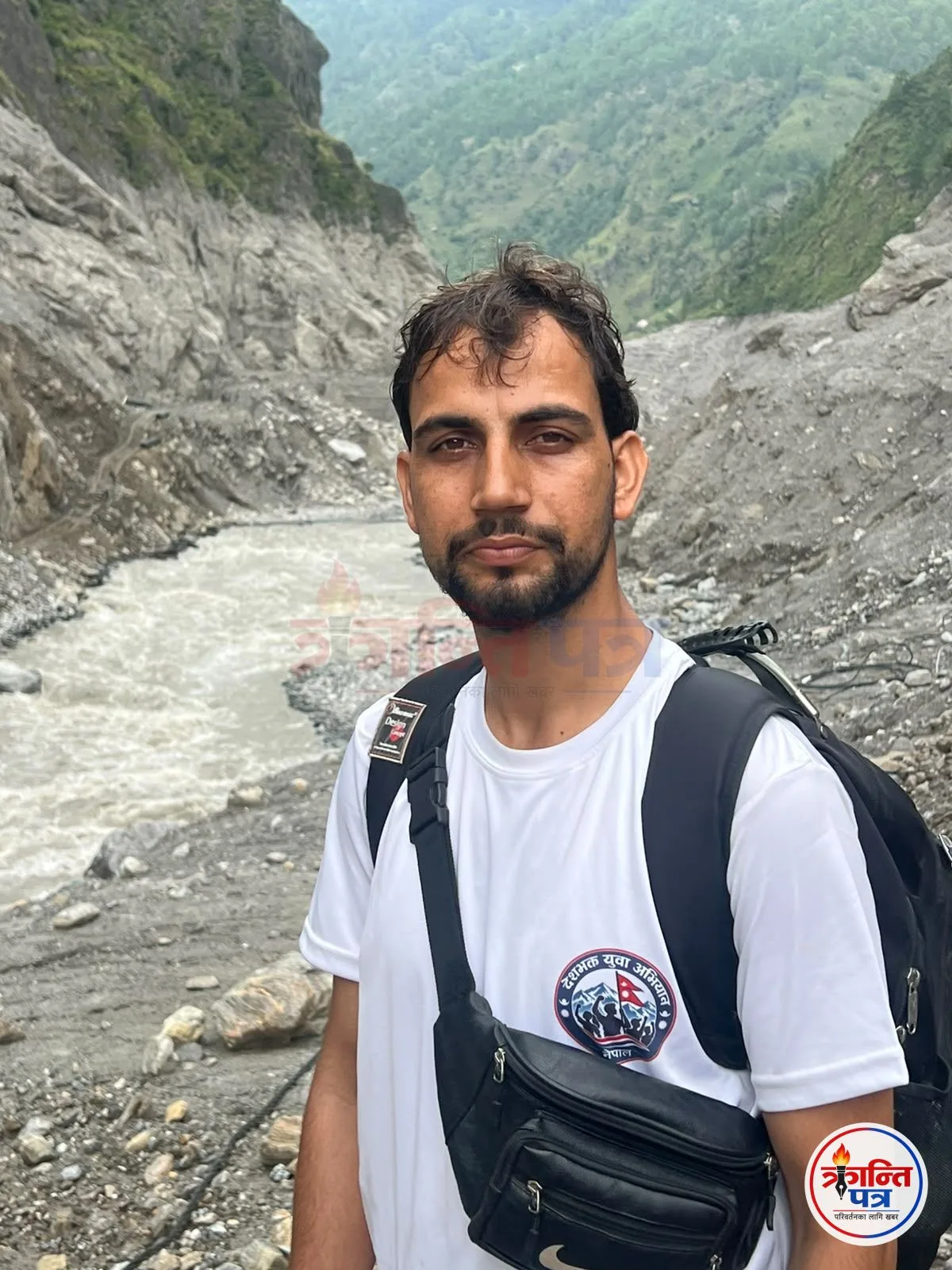
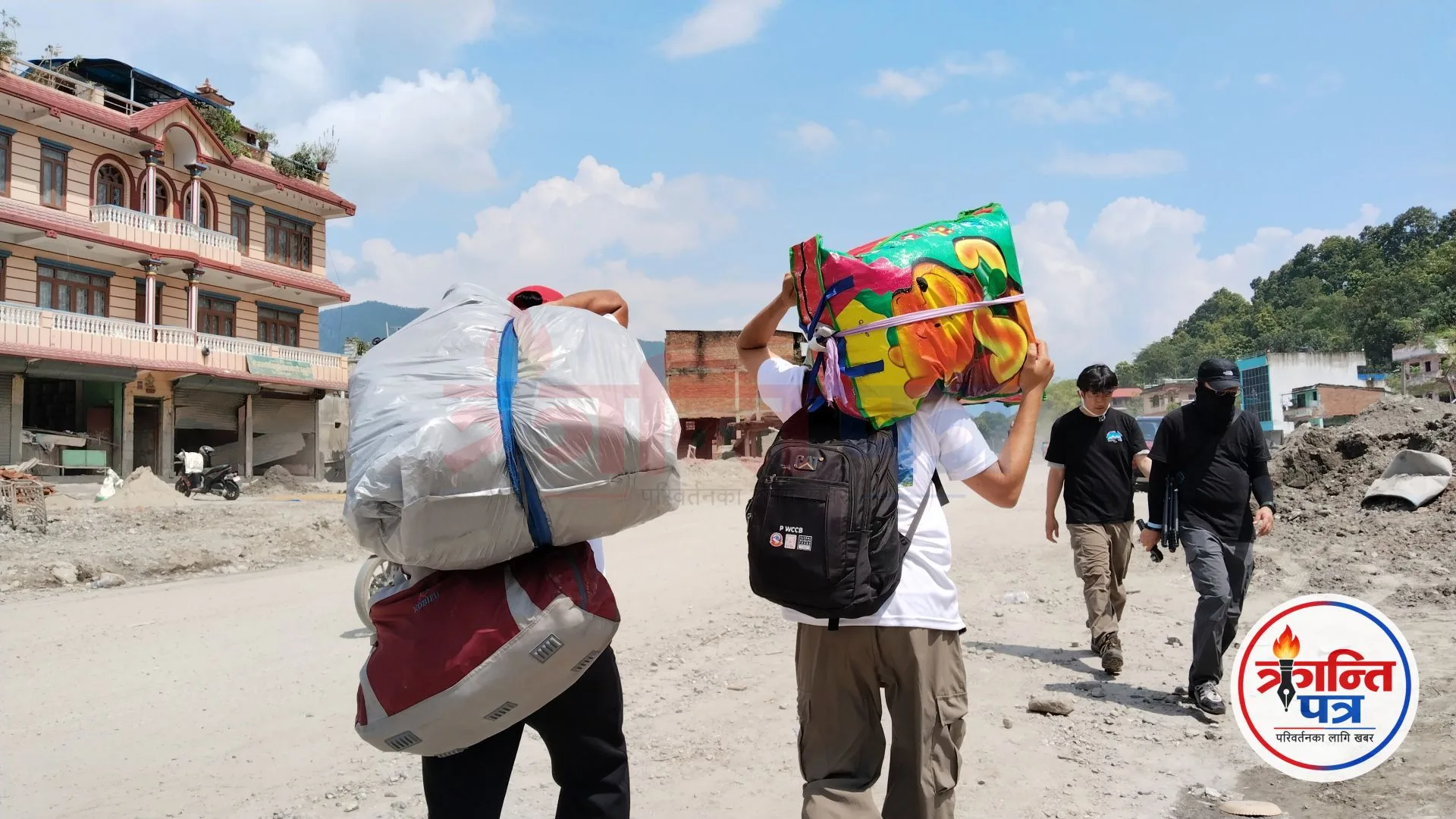
We decided to go to the affected areas of Rasuwa and Nuwakot. Along with me, former chair of my organisation ANNISU (Socialist) and coordinator of ‘Deshbhakta Yuva Nepal’ Prakash Shahi, and some journalist friends, got ready to go carrying relief materials. On Thursday, Bhadau 25, our vehicle set off from Machhapokhari for Nuwakot. Our main aim was to give what small help we could to disaster-hit families and students in Nuwakot and Rasuwa. But our journey was not limited to the formality of distributing relief; its deeper purpose was also to understand and study up close the level of the state’s presence in such major disasters in Nepal, and how practical and relevant the question of ‘climate justice’, debated so loudly on international platforms, is on the ground.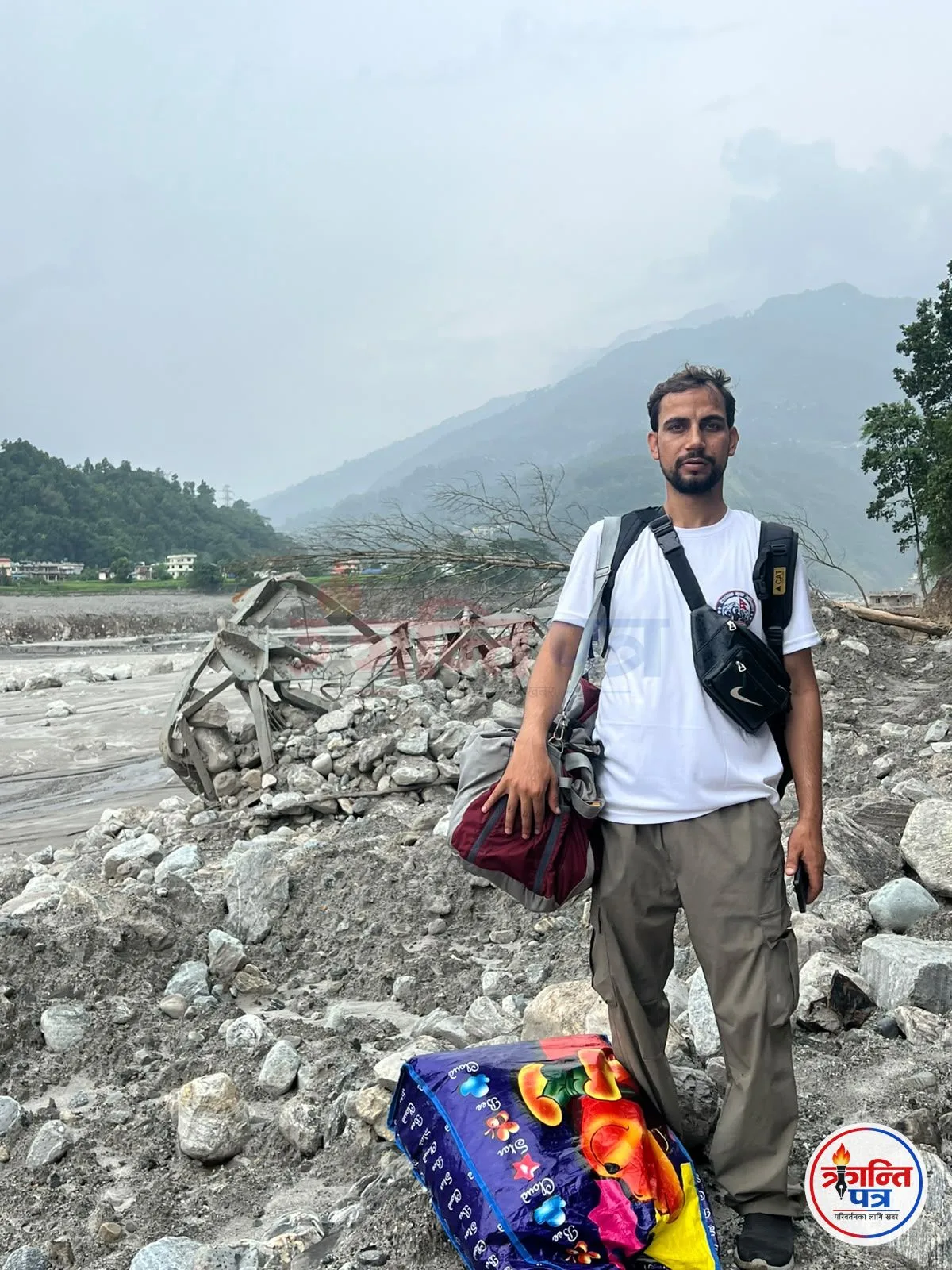
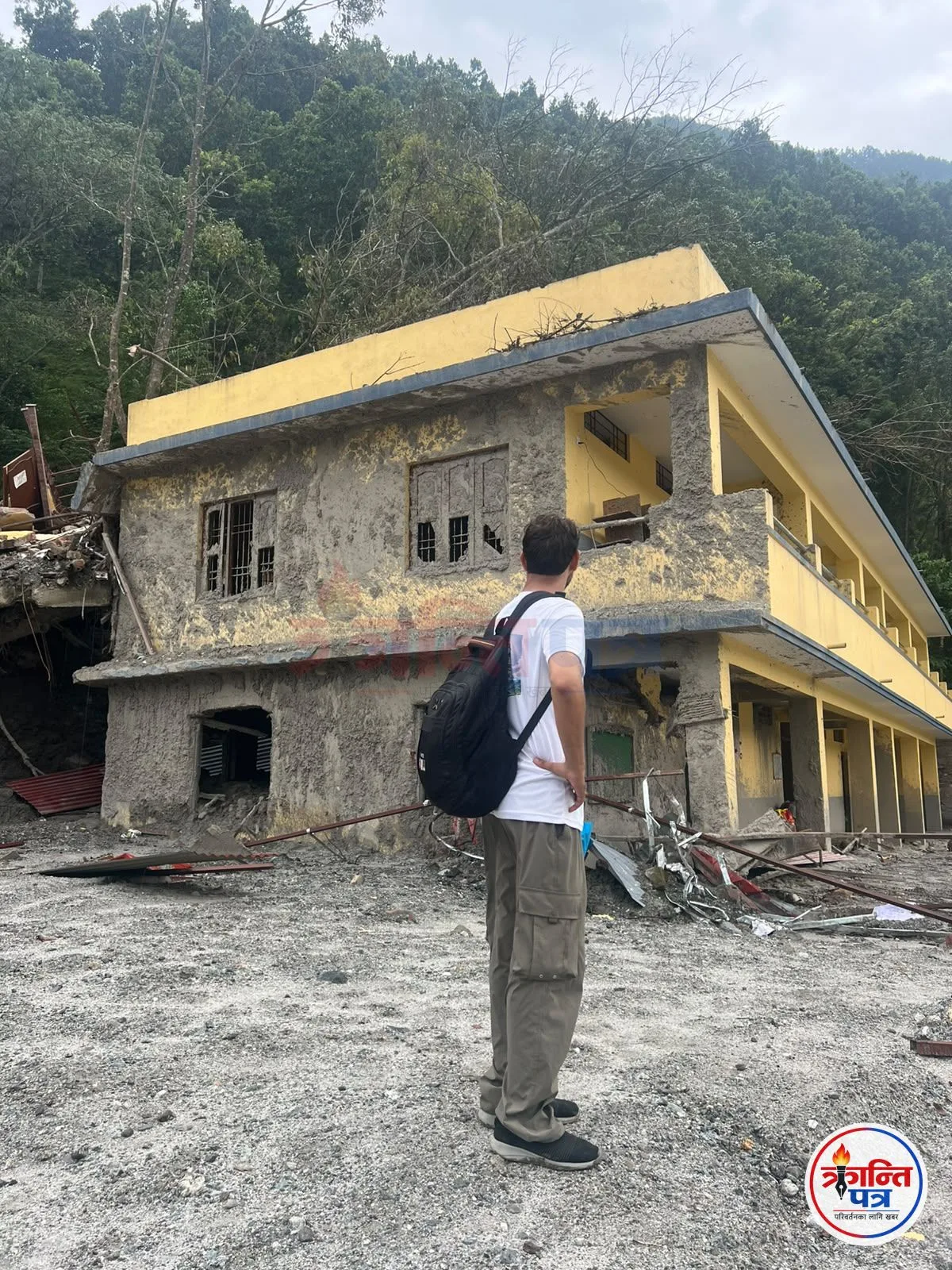
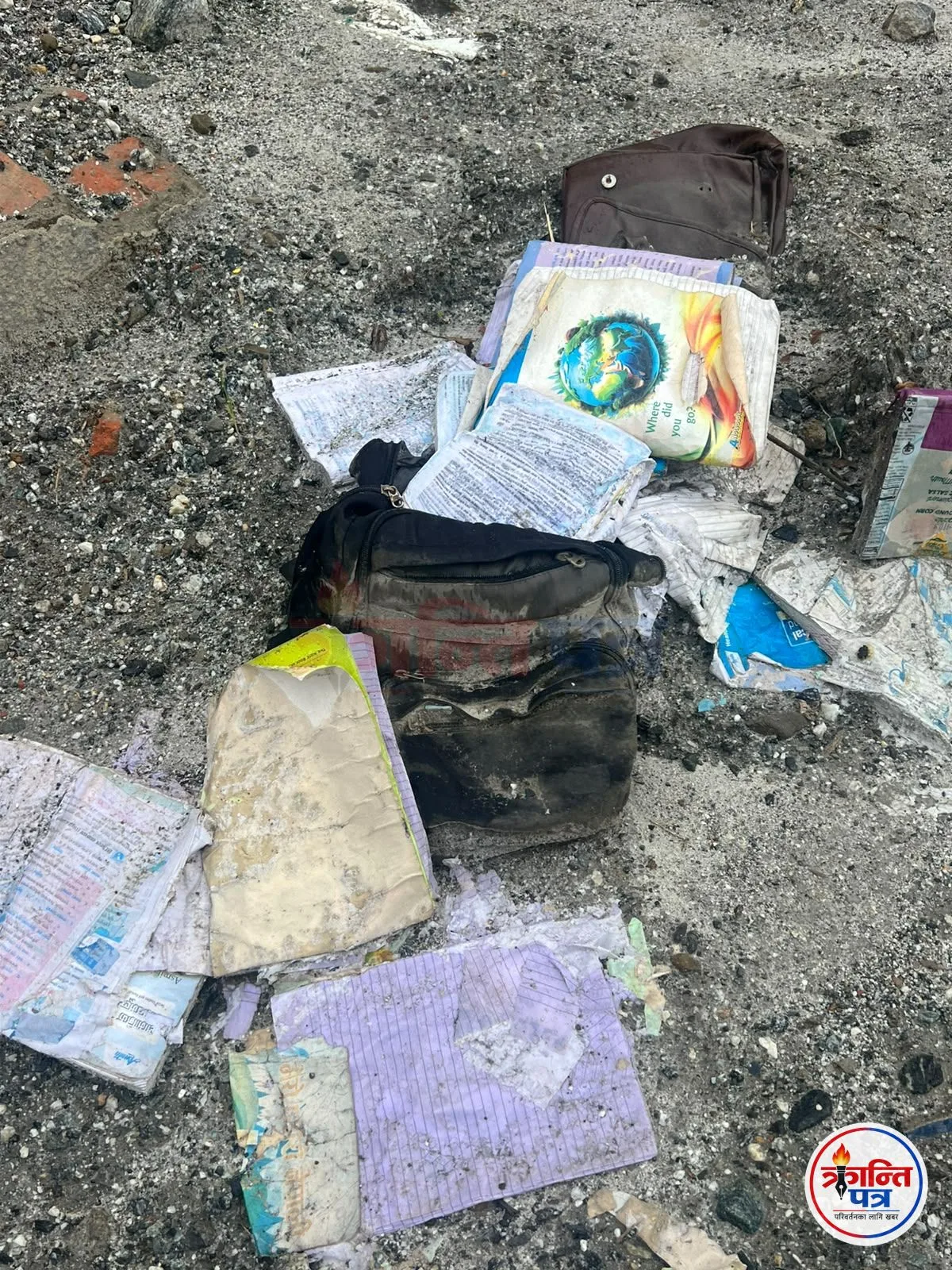
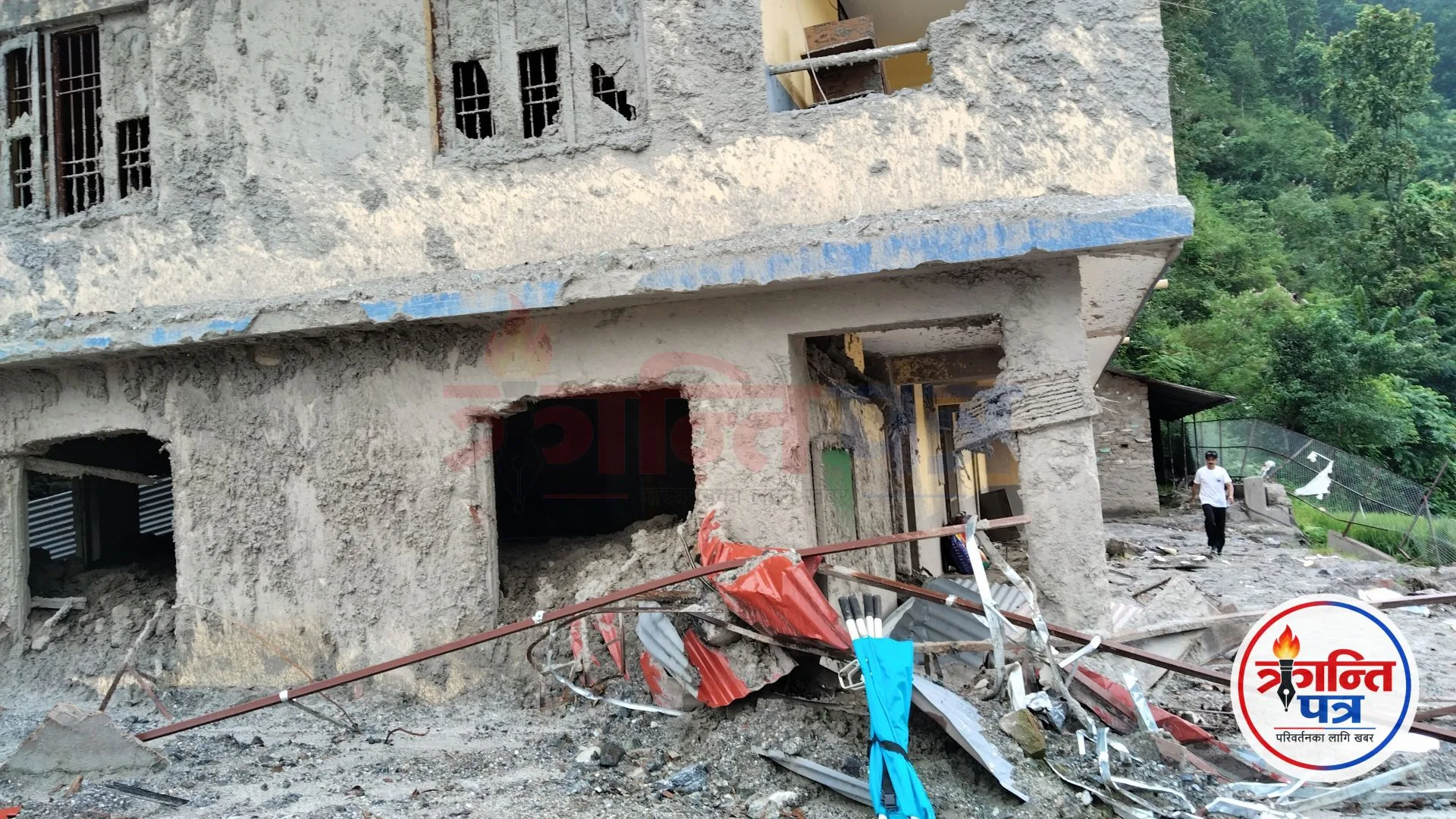
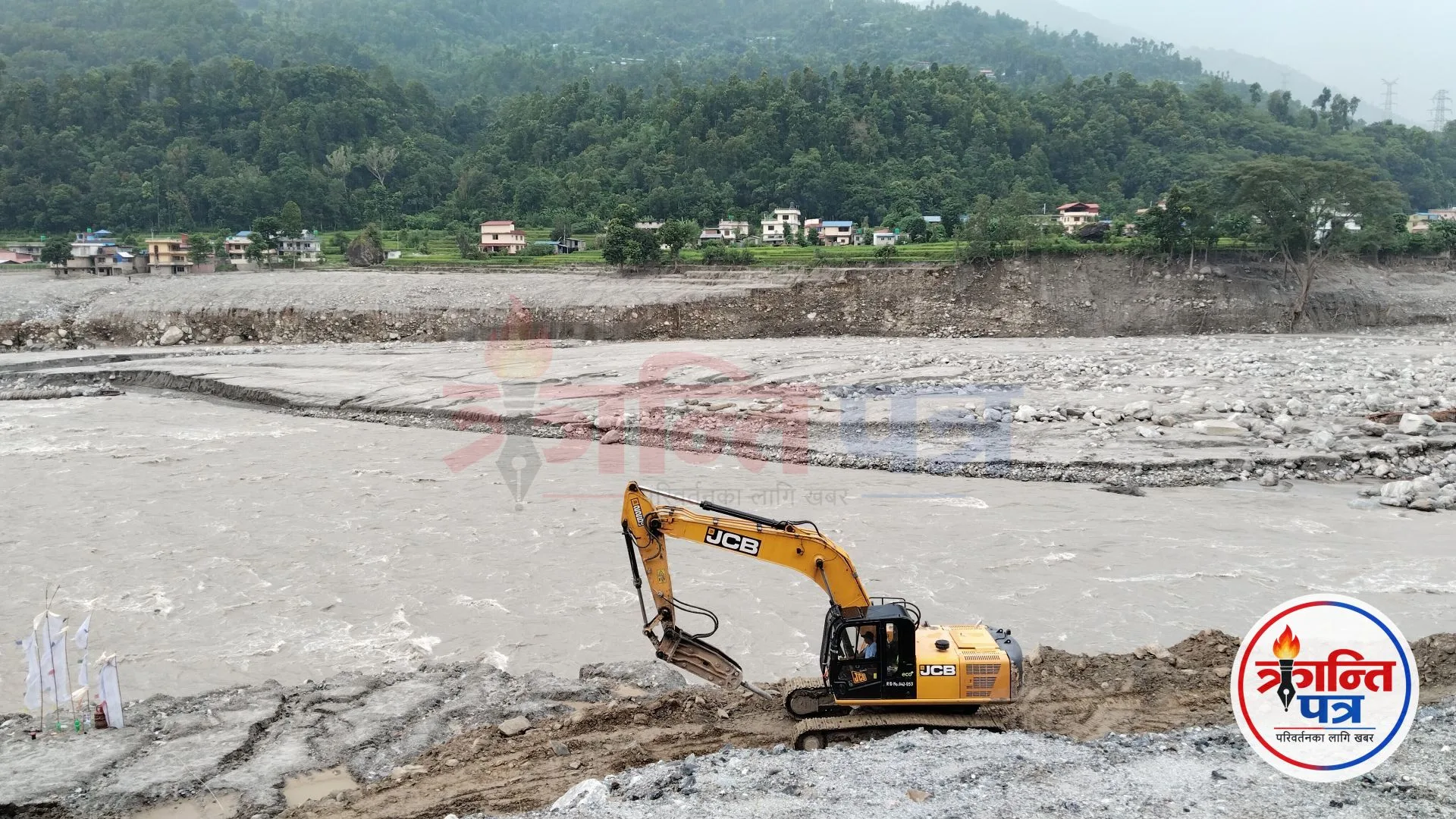
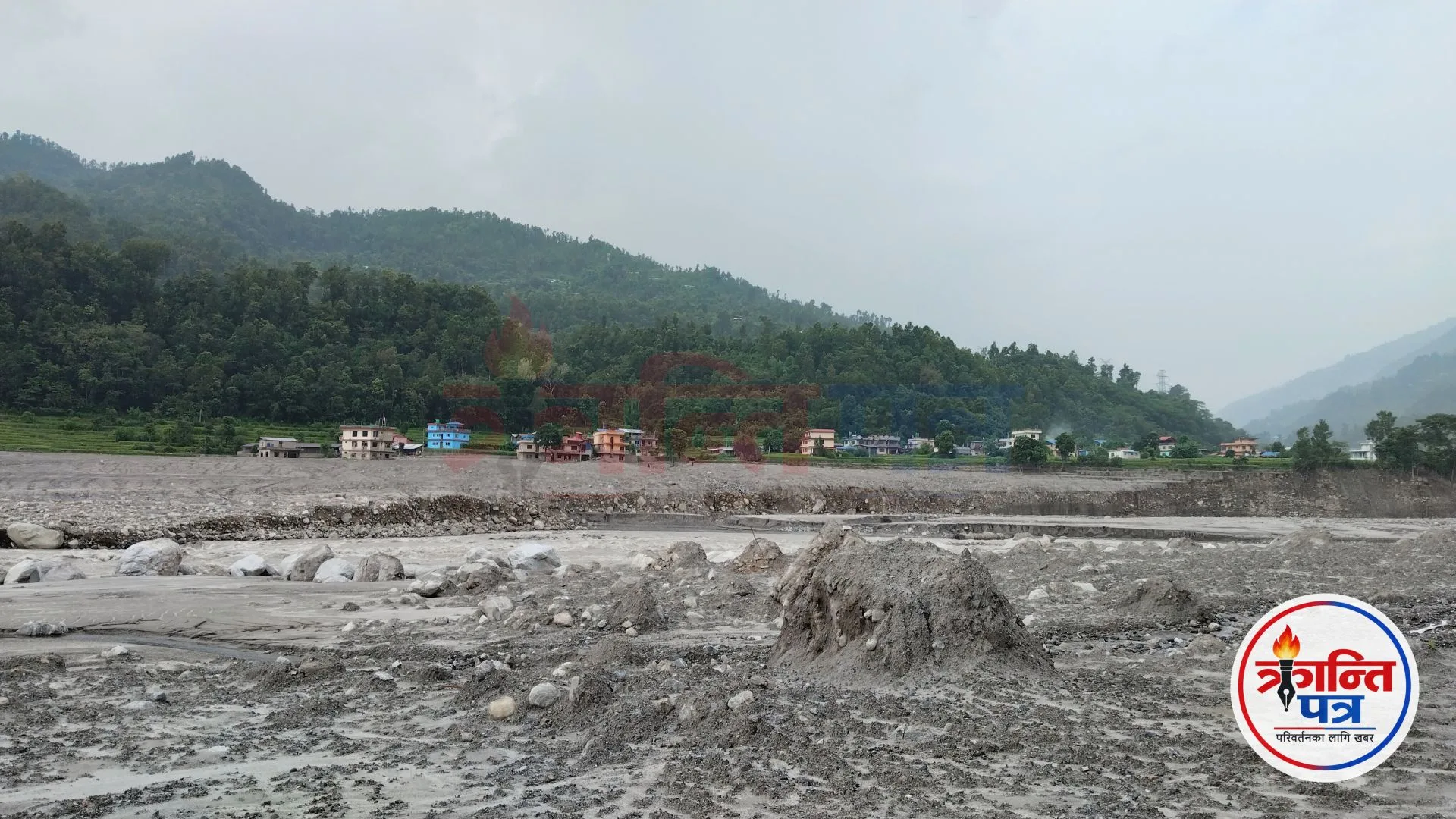
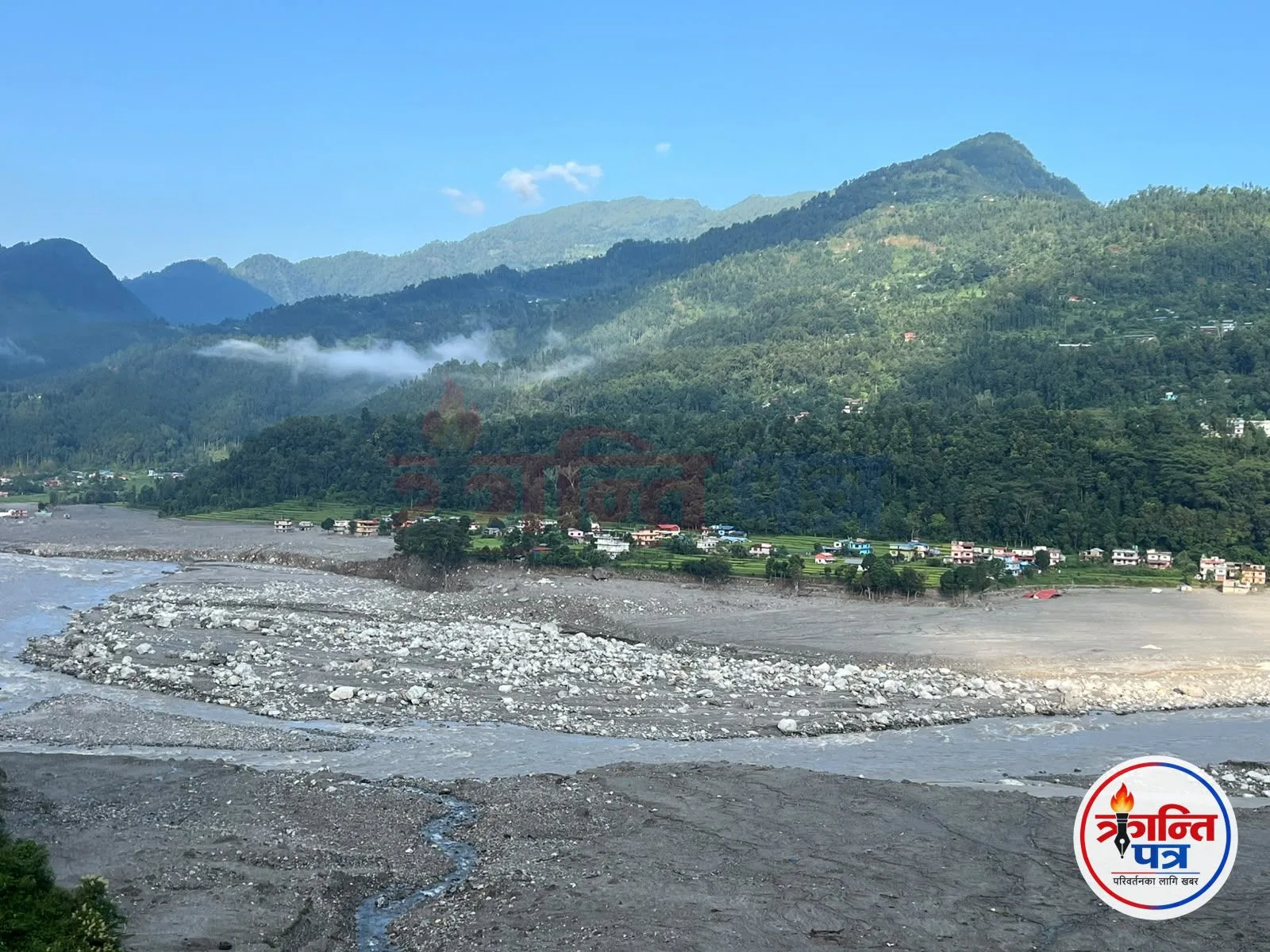
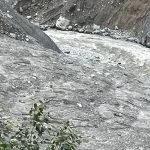
Our team reached the historic land of Devighat in Nuwakot via Bidur. Before our eyes we saw the heart-rending sight of the homes and riverbank land of about 400 families in Devighat eroded by the raging river and turned into something like a desert. When we reached ‘Shahid Jagat Prakash Jung Shah Sanskrit Secondary School’ (Bidur Municipality-5, Devighat) on the ridge a little above, we learned that about 800 students there had been directly affected by the catastrophic flood. We handed over the bags and educational materials we had to the school’s headteacher and continued our journey.
Dreams turned to riverbed, and the misery of temporary shelters
Seeing the condition of various victim families in Bidur, Trishuli and Nuwakot was heartbreaking. Seeing roads swept away by the flood, fertile fields buried, businesses destroyed, and people’s years of day-and-night labour wiped out without a trace in a single moment stirred a kind of anger at nature and fate. In some places, not even a house for shelter was left. Where house walls still stood, life inside was in complete disarray and without direction. With their old homes turned into riverbed, people could be seen wandering in search of ways to survive, work and make a living. Some victims were found living very hard, inhumane and painful lives in temporary ‘holding centres’ and tents set up by the government.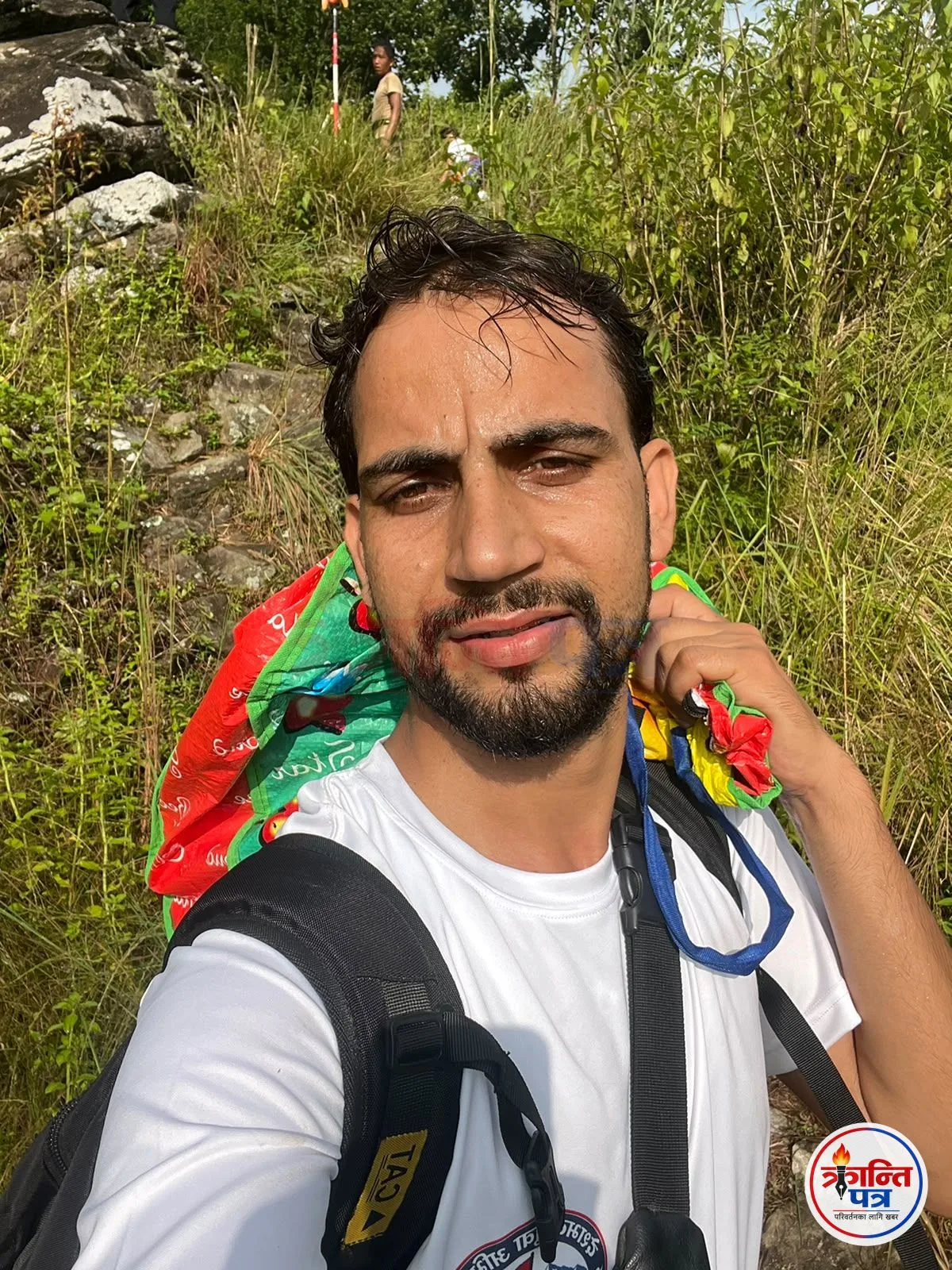
The bags, clothes and educational materials we carried were very little compared with the victims’ total needs. But the joy in the eyes and the smiles on the lips of those small students as we handed them over made one thing deeply clear. In a disaster, whatever the size of the help, just the feeling that someone has come to stand with you in your crisis becomes a great source of strength and a ray of hope for victims.
The truth on the ground: discrimination in relief and neglect by donor agencies
Since my academic field is ‘conflict, peace and development’, this journey was not just a means of humanitarian help for me but also an important opportunity for serious field research. When I looked at disaster, poverty, social inequality and the role of the state from the lowest level of society, a very ugly and bleak side of society and the existing system was exposed. Unless we go to the ground, we cannot fully understand people’s real pain, their true feelings and the structural weaknesses of the whole system.
During the journey, a serious, bitter and unanswered question arose. Should the state simply hand out limited relief and walk away every time a disaster strikes, or should it invest enough in risk reduction, preparedness and resilient infrastructure before disasters come? The tendency to think that duty is done by giving simple and voiceless people two sacks of rice and a few old clothes after floods and landslides has already become the state’s core policy. Not only that, victim families complained with heavy hearts that there is great ‘political bias’ and a game of connections even in relief distribution. Some genuine victim families around Nuwakot and Rasuwa lamented that they had not received even a straw in the name of relief so far, while those with connections and political closeness were doing politics and publicity in the name of relief.
Even more astonishing, various non-governmental organisations (NGOs/INGOs), local governments and party representatives were staging and publicising relief distribution with great fanfare, yet the actual victim community vented their anger to us, saying they had not even felt any relief. Some elderly people and mothers among the displaced families said, with tears in their eyes, ‘Son! More than these two sets of clothes and two mana of rice, what we need now is a safe place to live. We will manage clothes somehow, by begging or washing them, but where is the shelter to get through this winter and the monsoon? Our homes, families and fields are gone, there is no land left to live on, where do we go now?’ Their pitiful question made it crystal clear how weak, insensitive and irresponsible the state’s resettlement, reconstruction and risk management policy is.
International injustice and the climate justice debate
Another huge, ideological question raised by this journey is linked to climate change and international justice. Nepal’s contribution to global greenhouse gas emissions is next to nothing (a negligible less than 0.1 percent). But because of our sensitive Himalayan and hill terrain, fragile geology, socio-economic poverty and geographical complexity, we are on the front line of high risk from climate-related disasters. What kind of global justice is it that those who have contributed least to global pollution and carbon emissions must pay the biggest and most terrible price for it?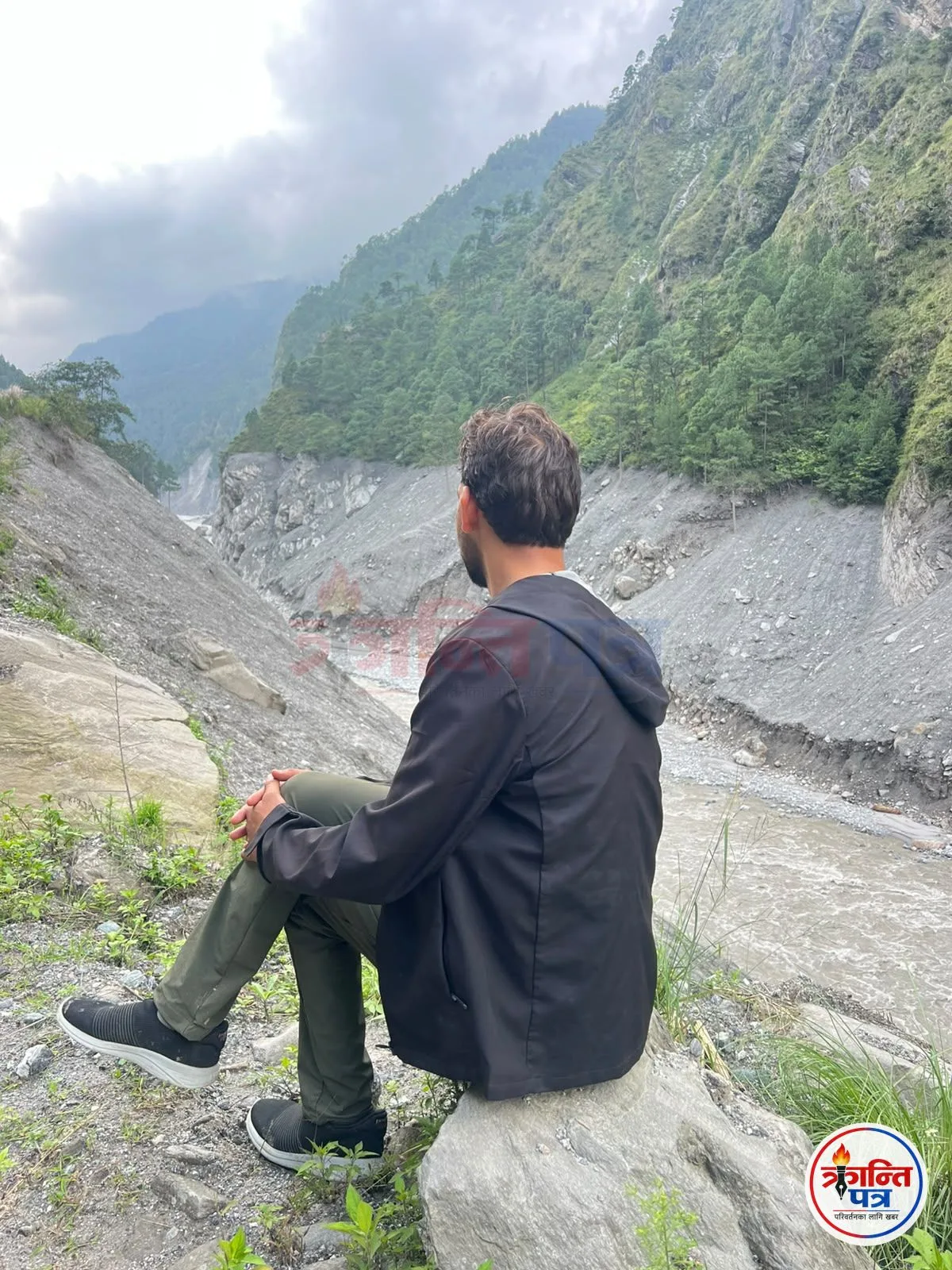
Extreme weather events such as unexpected rises in temperature, unseasonal heavy rain, and glacial lake outburst floods (GLOF) as glaciers in the Himalaya melt rapidly are having serious and irreparable effects on our lives, agriculture, water resources and infrastructure. Nepal’s own ‘Nationally Determined Contribution’ (NDC 3.0) report also clearly acknowledges this risk and the potential loss.
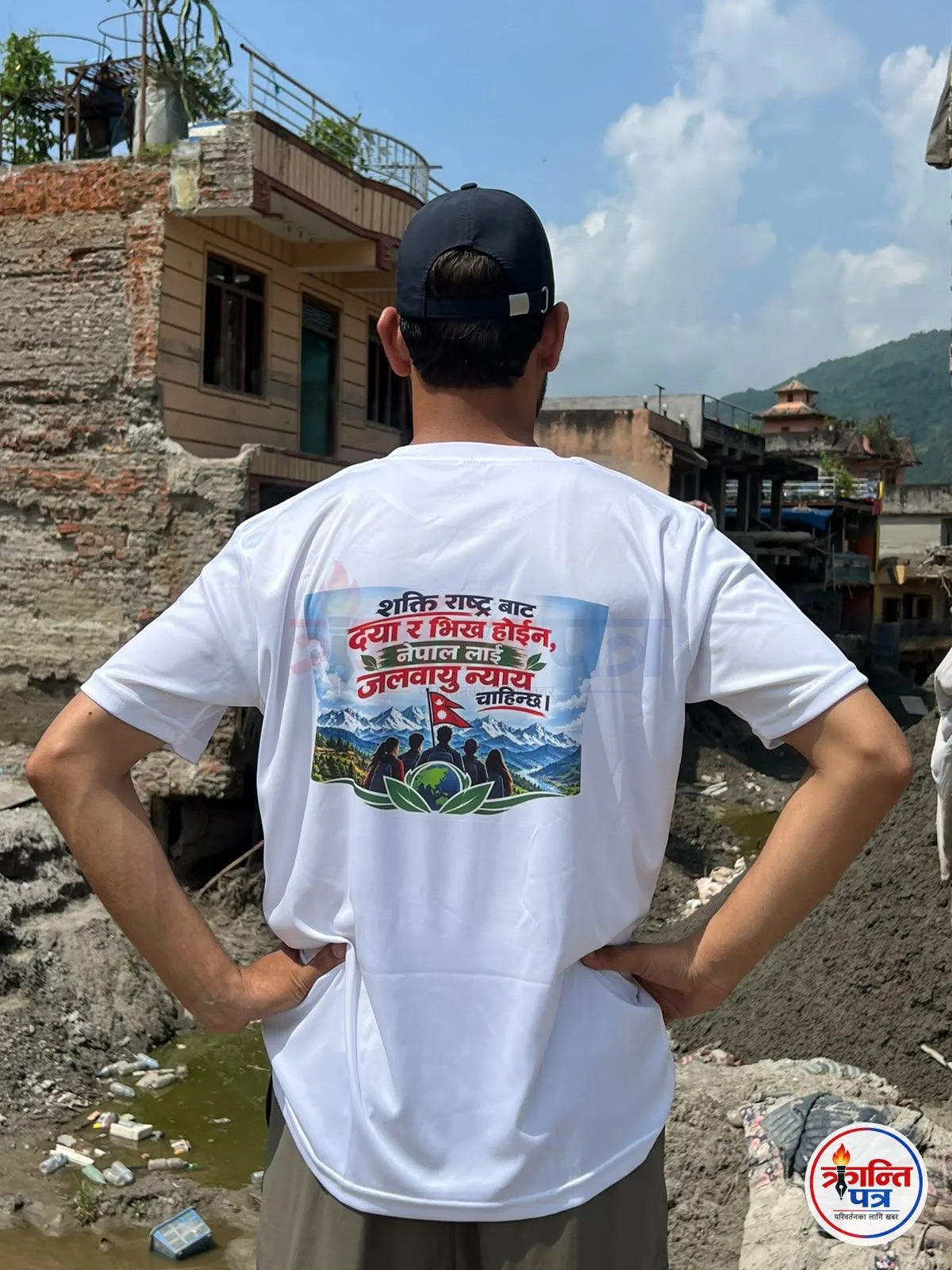
So Nepal is not asking the international community for alms, grants or pity; this is a demand for our just, constitutional and universal rights. International compensation and support for properly addressing the loss and damage caused by the climate crisis, for climate finance, technology transfer and the sustainable resettlement of affected communities are not just necessary but obligatory. The Government of Nepal must raise this voice strongly, effectively and diplomatically, with its policy and factual documents, on international platforms such as the COP conferences. This voice must not stay limited to leaders’ and ministers’ stage speeches and paper documents but must become every Nepali’s shared, loud and national resolve.
Not just relief, but psychosocial recovery and sustainable planning
Our study visit and relief trip to Nuwakot and Rasuwa has made one thing clear. A disaster is not just a natural or weather event. It has brought to the surface the complex questions of our overall development model, the level of state preparedness, existing social inequality and global climate injustice.
On reaching the settlements affected by the Bhotekoshi flood, the physical destruction was plain to see, but even more terrifying was the serious, long-term effect on people’s mental health. Members of many families have still not come out of the terrible pain of losing their loved ones, homes and years of earnings in a moment. Many families have reached a state of trauma in which they freeze, tremble and cannot sleep when it rains a little at night or the river roars. So it has now become essential for the state and the agencies concerned not to stop at short-term relief of rice, noodles and tarpaulins, but to bring a concrete, scientific programme of ‘psychosocial counselling’ for those affected and their long-term, permanent resettlement in safe places.
The situation of flood-affected children in particular is even more sensitive and risky. Creating an environment for students who have lost their family’s support or become homeless to return to school, and widening access to the educational materials, safe environment and psychosocial support they need to continue studying, must be the state’s first priority. The dignified and sustainable resettlement of children and victim families must now become the main government policy and action plan.
Recently, solidarity and voices against the climate crisis have been rising around the world. Small and least developed countries like Nepal are becoming targets of various natural and climate-related disasters. Distributing short-term relief to affected families may be a temporary balm, but if the state does not make scientific, environmental and technical plans for the long term, the days ahead are sure to be even more terrifying and destructive.
Nepal must now ask the world community not for pity, compassion or sympathy, but for its just rights and universal ‘climate justice’. Nepal needs justice, not pity!
(Joshi is an MPhil-PhD scholar in the Department of Conflict, Peace and Development Studies at Tribhuvan University. He is also a central leader of the student organisation ANNISU (Socialist), close to Biplav.)
Photos: