







This story was translated from Nepali. Read the original in Nepali
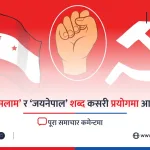
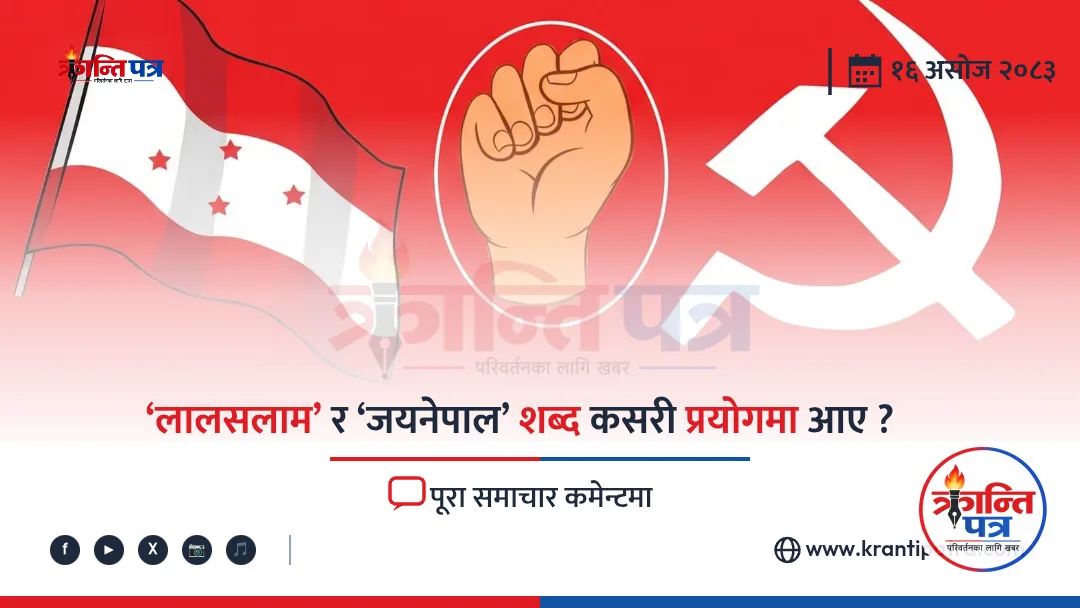
Kathmandu. The word revolutionaries use when they greet each other by raising a fist in the shape of a hammer and sickle is called ‘Lal Salaam’. The word is a translation of ‘red salute’. ‘Lal’ means red and ‘salaam’ means greeting, salutation or namaste. As red is the symbol of revolution, those who want revolution greet each other with revolutionary feeling and respect by giving a red salute, or Lal Salaam. Lal Salaam is used especially by communist revolutionaries.
Lal Salaam is the term communists say. Translated into Nepali, ‘lal’ is an Urdu word meaning red or revolution, and ‘salaam’ is a Hindi word meaning greeting or namaste. The term Lal Salaam is used not only by communists in Nepal but by communist parties around the world, including in India, Pakistan, Bangladesh and Afghanistan.
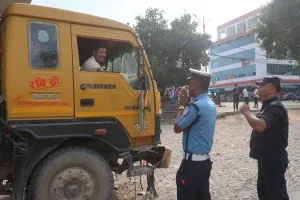
The term ‘Jai Nepal’ also has a similar historical context. In 1997 BS, when martyr Shukraraj Shastri was about to be hanged and was asked what his last wish was, he died saying ‘Jai Nepal’. The ‘Jai Nepal’ used in Nepal Police also comes from 2007 BS, when ‘Jai Nepal’ was the slogan of the Mukti Sena (liberation army) formed by the Nepali Congress. After the Rana regime ended, the Mukti Sena was merged into Nepal Police, and ‘Jai Nepal’ is believed to have taken hold inside the police as well.
‘Jai Nepal’ means ‘victory to Nepal’. Formally, although leaders and cadres of the Nepali Congress say ‘Jai Nepal’, it is a national term. Even though Congress members use it more, its meaning is of national importance. It has not, however, gained international reach.
While the term Lal Salaam gives communist revolutionaries a separate identity, ‘Jai Nepal’ is a term all parties, leaders and cadres in Nepal can use. ‘Jai Nepal’ is not a term that reflects a capitalist identity. But because its use in Nepal was popularised by capitalists, forces representing all ideologies do not yet appear to have formally adopted ‘Jai Nepal’ as their own.